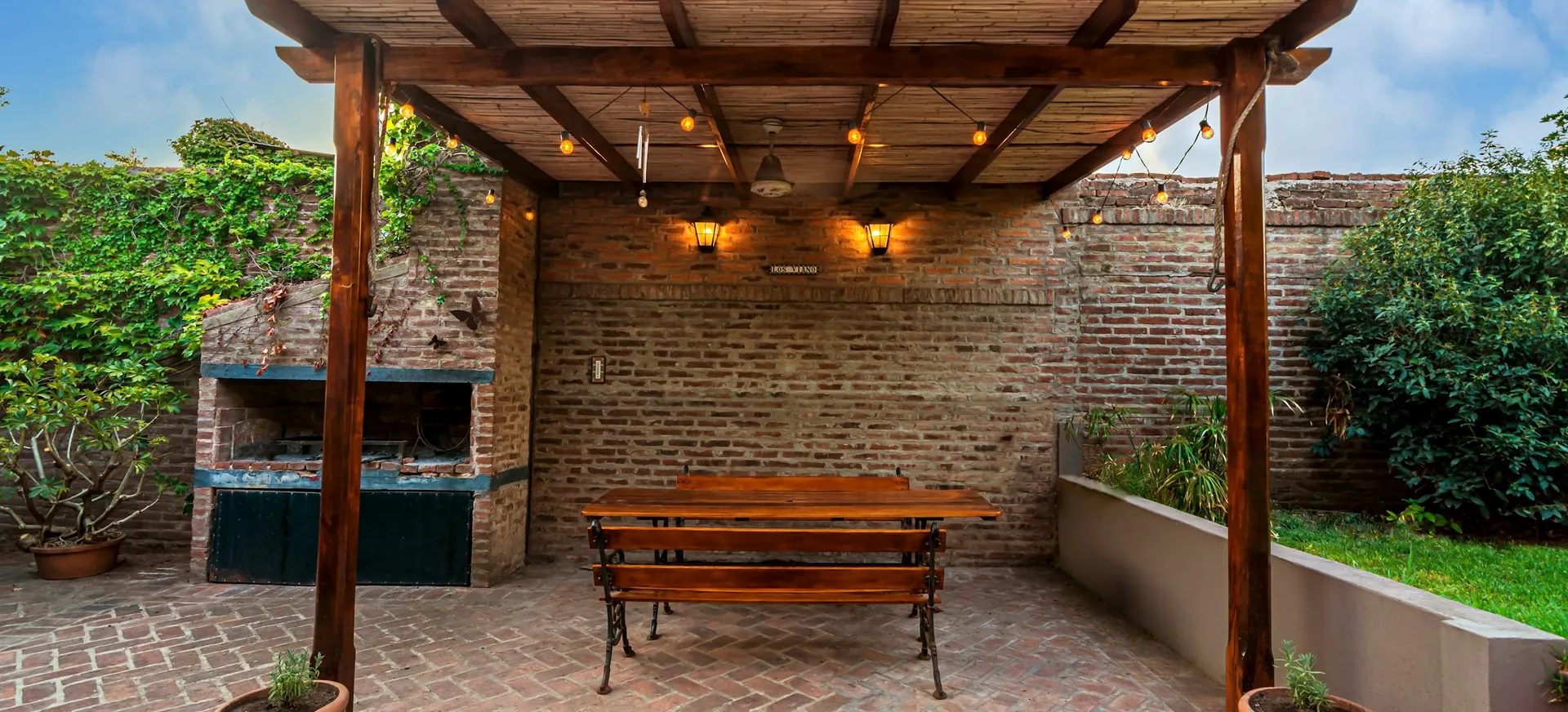
Short answer: It depends on where you live. Many local codes start from the International Residential Code, which exempts small detached accessory structures (200 sq ft in the 2021 edition), but cities and counties amend it, attached structures are treated differently, and your HOA can add its own approval. Call your building department before you order.
What the model code says
Most US cities and counties build their residential rules on the International Residential Code (IRC), published by the International Code Council (ICC), and amend it locally. Section R105.2 lists work exempt from a building permit. In the 2021 edition, item 1 reads: "Other than storm shelters, one-story detached accessory structures, provided that the floor area does not exceed 200 square feet (18.58 m2)." We quote it from Island County, Washington's reproduction of the 2021 IRC exemption list (county document). The same section says an exemption does not authorize work that violates the code or other local laws.
Older editions were narrower: the 2012 wording exempted detached accessory structures "used as tool and storage sheds, playhouses and similar uses" up to 200 square feet (ICC, 2012 code changes sample). Which edition and which amendments apply depends entirely on your jurisdiction.
How four local governments apply it
Here are four official pages, read on November 15, 2026. They show how different the answer can be.
- City of San Diego, California. Patio covers that do not exceed 300 sq ft of projected roof area "may be exempt" from a building permit for single-family homes and duplexes, but a permit is required if, among other conditions, the cover encroaches into setbacks, sits in the Coastal Zone, on environmentally sensitive land or in a historic district. Electrical permits may still be required (Information Bulletin 206).
- Town of Little Elm, Texas. "All patio covers, arbors and pergolas greater than 200 square feet require a permit", with drawings, a site plan and, in an HOA subdivision, an HOA approval letter. Patio covers "shall not be anchored to veneer" (town requirements, March 18, 2024).
- Jefferson County, Washington. Detached one-story accessory structures of 200 sq ft or less do not need a building permit, but "must still conform to the site requirements, such as setbacks, height, impervious surface and building lot coverage" (county handout dated June 25, 2024).
- Island County, Washington publishes the 2021 IRC exemption list quoted above.
Attached to the house: expect more scrutiny
The IRC exemption above is for detached structures. A wall-mounted pergola is attached, so it usually falls outside it, and how it is fastened to your wall becomes part of the review: Little Elm requires the attachment to bear on a load-bearing wall, not on veneer. Backyard Discovery writes on its Evanston page: "This product permanently attaches to your house; confirm local building codes, HOA, and product specifications prior to purchase." Domi adds on its product page that its pergola "may require a permission". The brands themselves are telling you to check.
HOA rules: a separate approval
A homeowners association is a private set of rules, separate from the building code. It can require approval of the design, the color, the height or the location, even when no building permit is needed. Little Elm's town checklist goes as far as asking for an HOA approval letter with the permit application. Read your covenants or ask your HOA board before you order: a kit that is sent back costs a restocking fee at several brands (15% at Backyard Discovery, 25% plus shipping at Paragon).
Setbacks, height and lot coverage still apply
An exemption from a building permit is not an exemption from the zoning rules. Jefferson County, Washington spells it out: structures that need no building permit must still respect setbacks, height, impervious surface and lot coverage limits. San Diego turns a setback encroachment into a reason the patio cover needs a permit after all. In practice, measure the distance from each post to your property lines and check the height of the kit (most louvered kits stand around 8 ft; the Backyard Discovery Evanston is 101.53 in) against your local limits.
Motors, lights and outlets: a separate question
Even when the pergola itself is exempt, power may not be. San Diego notes that separate electrical permits may still be required for patio covers. That matters for motorized kits: PERGOLUX asks for a standard 120 V outdoor outlet, Mirador lists a 100–240 V supply for the 111S E-Motion, and Backyard Discovery's PowerPort outlets need a power source. If you need a new outdoor circuit, your electrician will know what your jurisdiction requires.
What the permit office may ask for
Little Elm's checklist is a good picture of a typical application: dimensioned drawings with front, side and top elevations, the total square footage, a material list, the detail of the attachment to the house and of the footing, and a site plan with the distance to each property line. San Diego accepts an evaluation report or an approved plan from the material supplier for patio covers. Kit brands rarely publish these documents on the product page, so ask before you order: a brand that can send drawings and anchoring details saves you time at the counter.
How to check in 15 minutes
- Find your building department: the city if you live inside city limits, the county otherwise.
- Search its website for "patio cover", "pergola" or "accessory structure", then for "work exempt from permit".
- Note the size threshold, the height limit, setbacks from property lines, and whether attached structures are treated differently.
- If a permit is needed, ask which documents they want: site plan, product drawings, anchoring details, engineering. Then ask the brand whether it can supply them (see our wind and snow guide).
- Ask your HOA, in writing.
Keep the answers with your order. This page is general information from official sources, not legal advice; your building department has the final word.
Our three picks for this
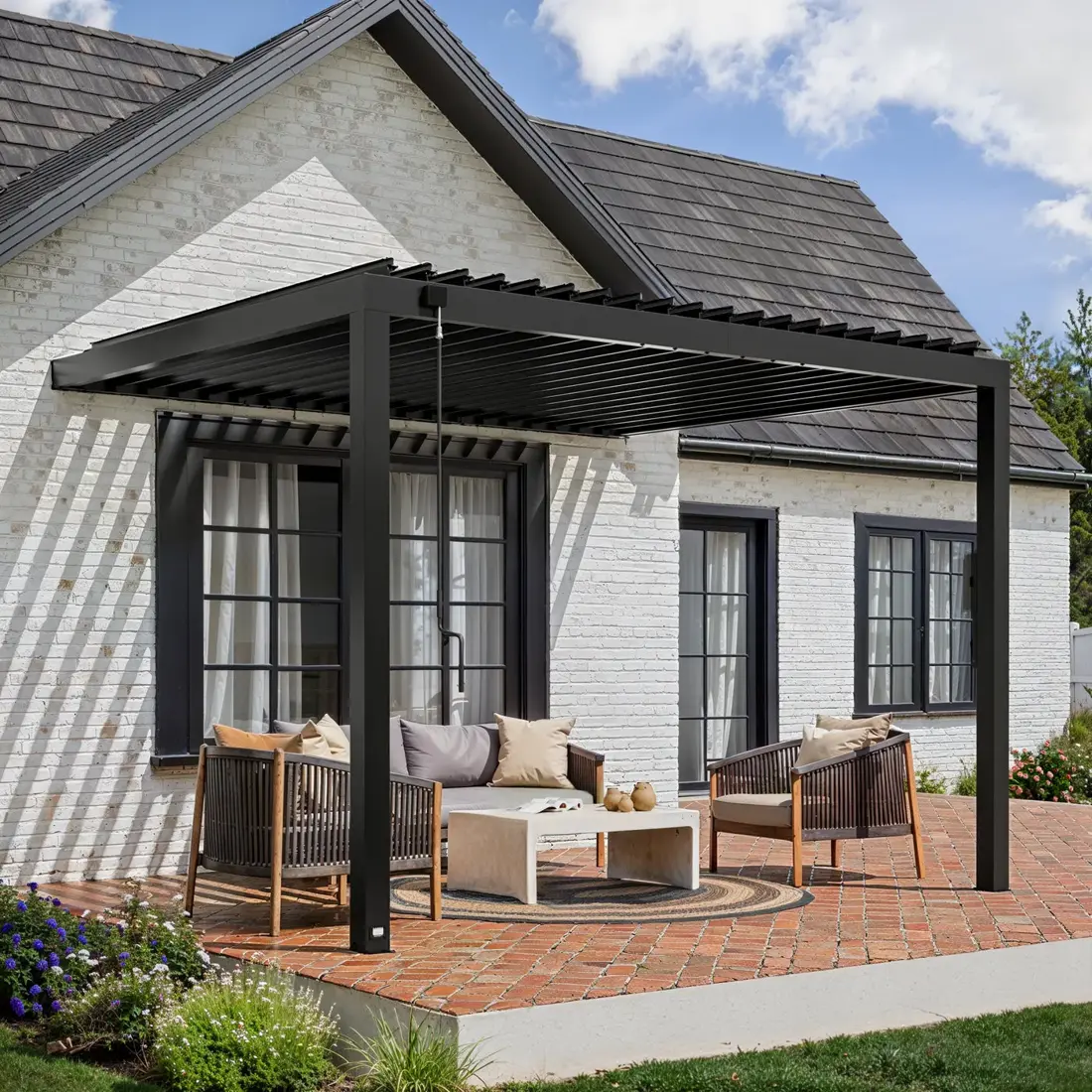
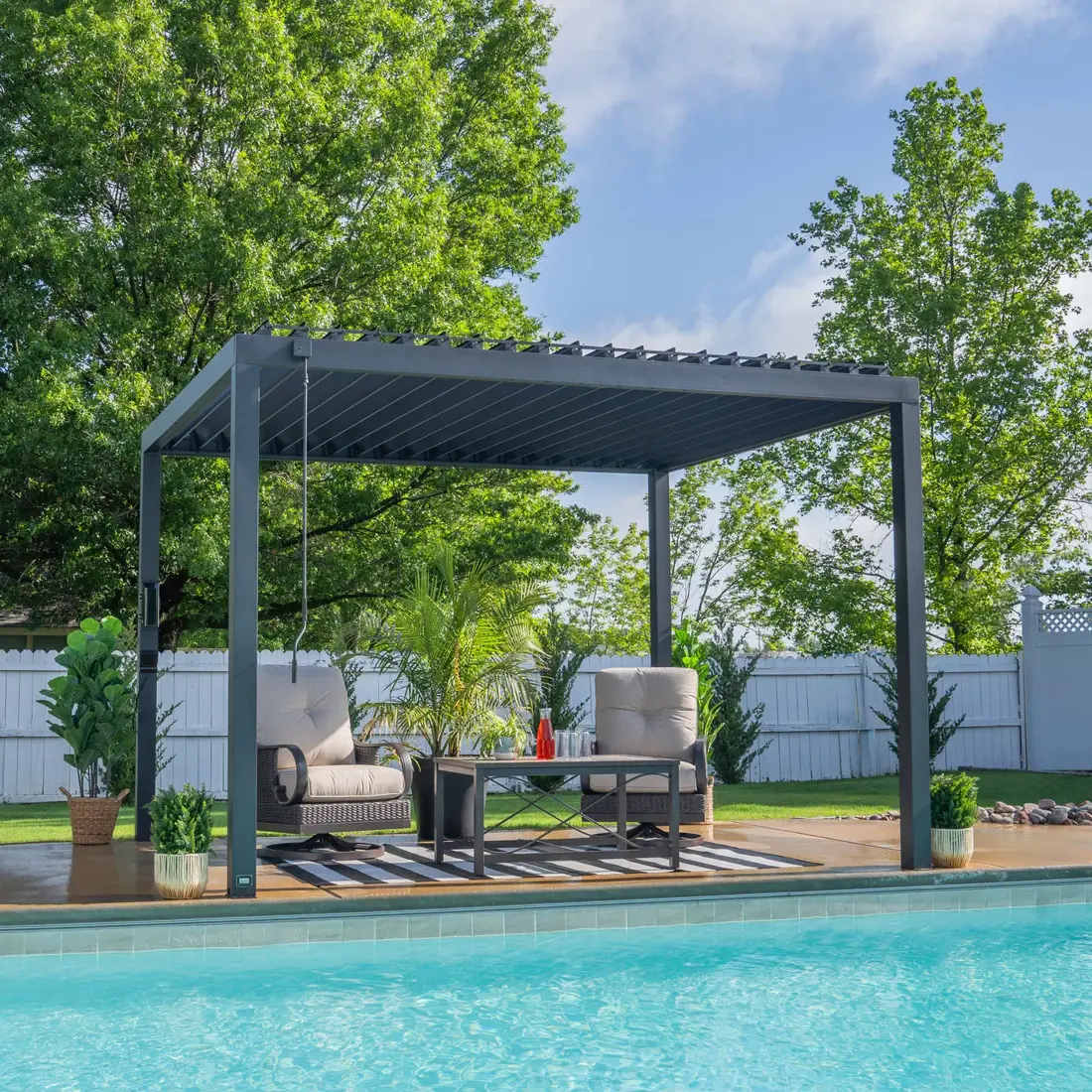
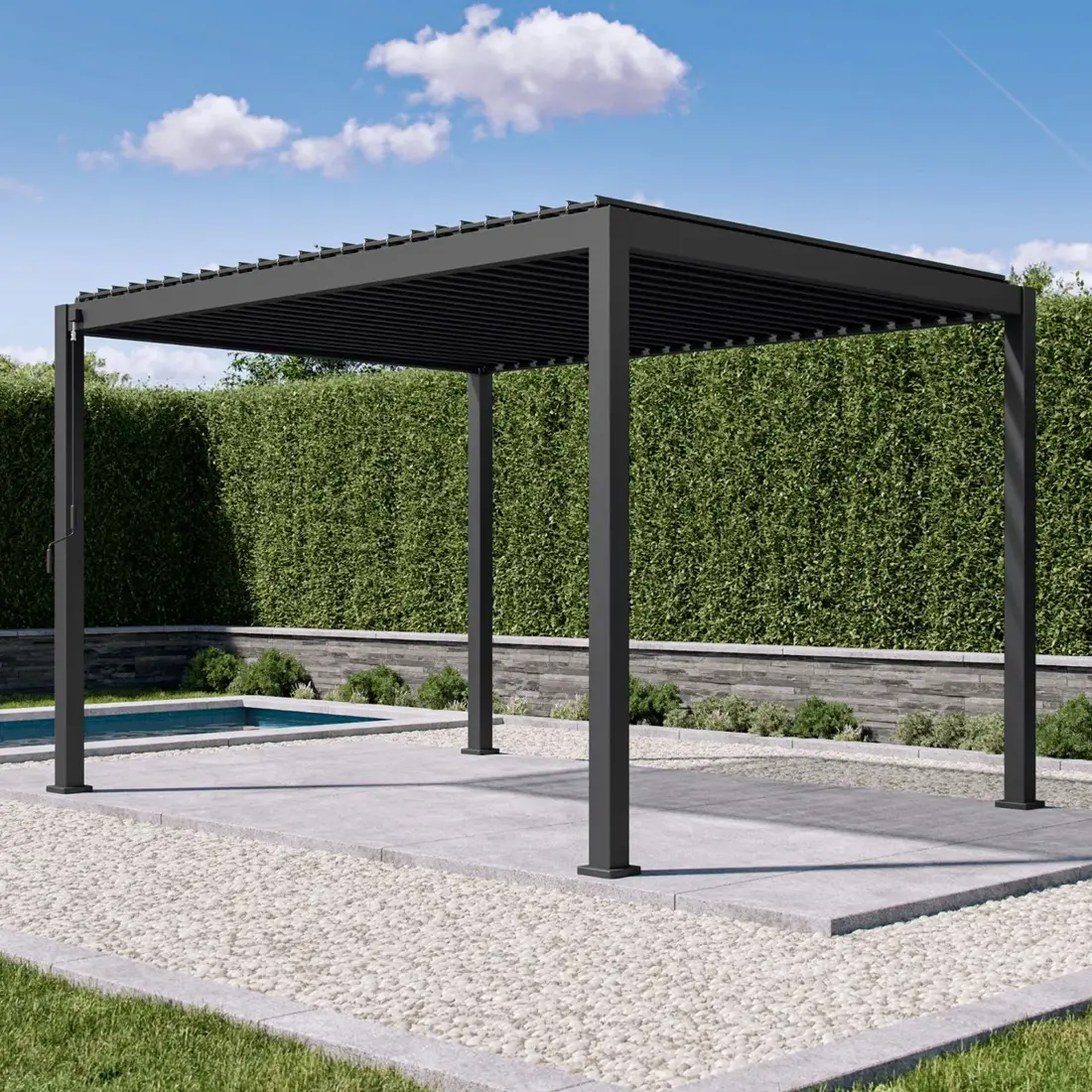
Want the full order? See the best louvered pergola ranking or compare any three kits in the comparison tool.
Questions buyers ask
Do I need a permit for a 10x12 pergola?
Not always. A detached 10×12 (120 sq ft) is under the 200 sq ft exemption many places adopt from the IRC, but local amendments, setbacks, height limits and HOA rules can still apply. Check with your building department.
Do I need a permit for a pergola attached to my house?
More often than for a detached one, because the IRC exemption covers detached structures only and the fastening to your wall matters. Ask your building department.
Does an HOA need to approve a pergola?
If you live in an HOA, very often yes, regardless of the building permit. Read your covenants and ask in writing.
What happens if I build a pergola without a permit?
It depends on your jurisdiction. Ask your building department; this site does not give legal advice.
Written by Laura Benson for the Best Louvered Pergola editorial team, updated November 15, 2026. Some links are affiliate links; they never change our scores (disclosure).